
Rashid Khan's 80-Point Cushion: Ranking Arithmetic, the Abu Dhabi Surface, and Shai Hope's Separate Question
**मुख्य उत्तर:** राशिद खान 742 अंकों के साथ आईसीसी वनडे गेंदबाज़ी रैंकिंग में नंबर एक पर बने हुए हैं और दूसरे स्थान से 80 अंक आगे हैं, जबकि शाई होप वेस्टइंडीज़ के भारत दौरे पर दो टी20ई शतक लगाने के बाद टी20ई बल्लेबाज़ी रैंकिंग में नौवें स्थान पर पहुँचे हैं। **मुख्य तथ्य:** - राशिद खान: 742 अंक, वनडे गेंदबाज़ी में नंबर एक, दूसरे स्थान से 80 अंक आगे। - अफ़ग़ानिस्तान ने अबू धाबी में ज़िम्बाब्वे को 158 रन से हराया; राशिद खान ने 4-17 लिए। - सिदीकुल्लाह अताल ने 102 रन बनाए; अफ़ग़ानिस्तान ने पहले बल्लेबाज़ी करते हुए 294 रन बनाए। - शाई होप टी20ई बल्लेबाज़ी में नौवें स्थान पर; वेस्टइंडीज़ ने भारत में सीरीज़ 2-2 से बराबर की। - होप के दोनों टी20ई शतक ऐसी पारियों में आए जब टीम सीरीज़ में पिछड़ रही थी। **स्रोत:** विस्डन रैंकिंग रिपोर्ट; प्रकाशन तिथि उपलब्ध नहीं कराई गई। दूसरे स्थान के गेंदबाज़ का आँकड़ा (अबरार अहमद, 662 अंक) बताया गया है, स्वतंत्र सत्यापन बाकी है। **संबंधित प्रश्न-उत्तर:** प्रश्न: क्या 742 अंक राशिद खान की मौजूदा फ़ॉर्म का सीधा माप हैं? उत्तर: नहीं, यह घूमते भारित औसत पर आधारित पिछड़ा संकेतक है, जिसमें पुराने प्रदर्शन का वज़न घटता जाता है। प्रश्न: क्या शाई होप के चार शतक टी20ई फ़ॉर्म का सबूत हैं? उत्तर: नहीं, वह संख्या वनडे और टी20ई दोनों प्रारूपों को जोड़कर बनी है और अलग किए बिना कोई निष्कर्ष नहीं निकलता। प्रश्न: 80 अंकों का अंतर कितना टिकाऊ है? उत्तर: आईसीसी रेटिंग गणना में यह पर्याप्त गद्दी है, क्योंकि एक खराब सीरीज़ के बावजूद शीर्ष स्थान बना रह सकता है।
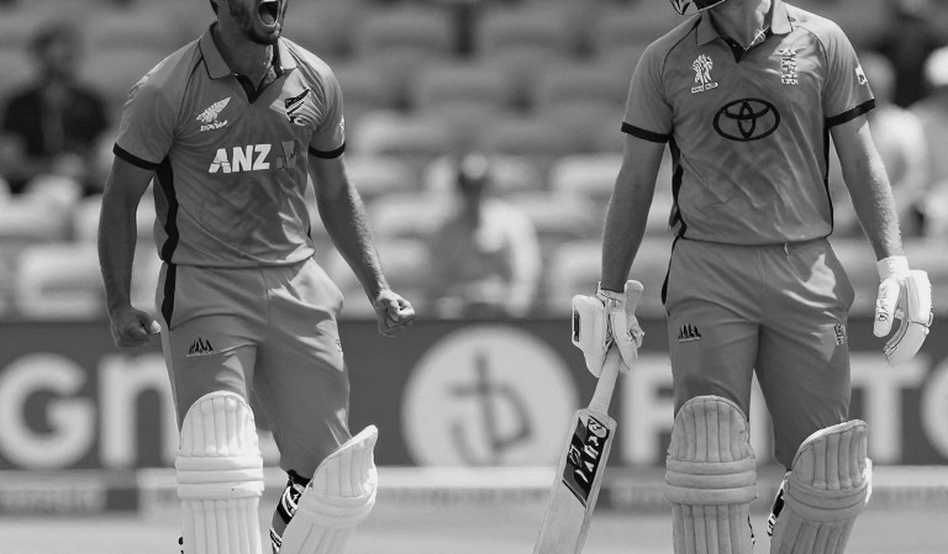
That slow Abu Dhabi surface where the ball does not come onto the bat but stops on the pitch. Afghanistan won the toss, chose to bat, made 294 — Sediqullah Atal's 102 was the spine of that innings. Zimbabwe's reply broke, the margin of defeat 158 runs, which means they were bundled out for roughly 136. On that scoreboard sits Rashid Khan's 4-17. Then the rankings report arrived: he remains No.1 in ODI bowling, 742 points, 80 clear of second place.
The headline will tell you his grip has tightened. For me the most important number in this story is not 4-17. It is the 80. Four wickets is an afternoon's event; an 80-point gap is a position, and positions tell you more than events do.
Rankings news is usually read the way a scorecard is read — who climbed, who fell, who overtook whom. A ranking is not a scorecard. It is a rolling weighted average in which older performances decay in value, opposition strength is factored in, and match volume is counted. I learned long ago that the first denial is often the first clue. There is no denial here — there is a blank space. This Wisden report carries no note on dew, weather or Duckworth-Lewis for either match. In Abu Dhabi's evening dew, a wrist-spinner taking 4-17 would be considerably harder. The information that was left out is the information that matters most.
Two entirely different things have been stitched into one report here: an ODI tri-series and a T20I series on West Indies' tour of India. Rashid's 742 points come from the ODI bowling table; Shai Hope's No.9 T20I batting rank comes from another table. Different rating algorithms, different minimum-match thresholds, different opposition pools. Joining the two in a single sentence is like using a cricketer's ODI hundreds to validate his T20I strike rate.
It is worth understanding how a rating is built, because this is exactly where a lot of people — including some very senior commentators — slip. An ICC player rating is not a straight average. It is a weighted average over a defined period, in which every older performance carries less weight as time passes. Runs or wickets against stronger opposition earn more points, against weaker opposition fewer. And most importantly: a player whose team plays very few matches holds a rating built on a thin sample. Which is why a ranking sometimes measures availability, not skill.
The tri-series context points the same way. For Afghanistan, Zimbabwe and Bangladesh, fixtures like these are among the very few left on their calendars. Taskin Ahmed's 3-44 in the same tournament confirms Bangladesh's presence. T20 league windows are squeezing bilateral ODIs, and a series at a neutral venue like Abu Dhabi is one of the few remaining places to bank points. I have watched this pattern for years: points accumulate where matches exist, and rankings follow points.
Before we get to Rashid, two figures demand honesty. The report names Abrar Ahmed as the second-placed bowler on 662 points. I have not been able to verify that independently, so it sits in the 'reported, verification pending' box. The report also prints the name 'Keshava Maharaj', which is almost certainly Keshav Maharaj, South Africa's left-arm orthodox spinner. A small spelling error — but in rankings journalism the name is the data.
Now the real number. 742 points, and an 80-point gap to No.2. In ICC arithmetic, 80 points is not a rounding artefact. It means Rashid does not need a great series to keep top spot; he merely needs to avoid a bad one. An ordinary stretch can hold him at No.1. The headline claim — the grip has tightened — is therefore correct, but the cause is not that glittering 4-17. It is this mathematical cushion. The real story in a ranking is almost never the wickets; it is the gap.
The engine of Rashid's rating is economy as much as wicket volume. A wrist-spinner conceding under 4.5 an over through the ODI middle phase compresses the opposition's entire innings. That effect does not only show in his own figures — it shows in the ratings of the men bowling at the other end, because batters are forced to take risks. Afghanistan's broader ODI competitiveness is built on that structure. Rashid's value is structural more than statistical.
Now back to the 4-17 that the report uses as its evidence. Afghanistan had made 294. Zimbabwe lost by 158, meaning they were bowled out for roughly 136. That tells you the contest was settled at the innings break. Rashid's four wickets were not a match-turning intervention; they were consolidation under scoreboard pressure. The distinction looks small, but when those four wickets are used to prove a No.1's 'grip', it changes the architecture of the whole argument.
Conditions must be counted too. Abu Dhabi is slow, low on bounce, and the same strip is reused — ILT20, IPL 2026, the 2026 T20 World Cup all saw it. On such a surface a wrist-spinner is close to unplayable; on a flat, bouncy pitch the same googly becomes hittable. A side chasing 295 takes risks, plays cross-batted, and that is precisely what feeds the wicket column. The rolling average protects the rating from conditions; the match figure has no such protection.
The age curve is in Rashid's favour as well. He is at the stage where wrist-spinners hold a plateau for years rather than falling away like fast bowlers. The current rating is plausibly a multi-year plateau, not a spike.
There is a counter-argument here, and it is the most interesting layer of the story. The bowler reported at No.2 also comes from a low-ODI-volume team — his rating sits on a thin sample and is therefore volatile. The faster the man below can fall, the more durable that 80-point gap looks. Sometimes a lead is strong because the man beneath is in a hurry to arrive, not because the man above is about to leave.
Now Shai Hope. No.9 in T20I batting, after a tour on which West Indies drew the series 2-2 in India. The report says his two T20I hundreds came in innings where the team was staring at a series deficit. That is the least weighted sentence in the piece and the heaviest.
Why? Because a hundred in a routine bilateral and a hundred under must-win pressure do not go into the same account. When a side is behind in a series, playing away against a team like India, the batter has no option but to take risk. Making hundreds under that pressure is evidence of temperament as much as skill. A 2-2 draw in India is a genuinely significant away result for West Indies, and Hope is at its centre.
But here the report makes an error I see repeatedly. It says Hope scored 'four hundreds overall'. That number is aggregated across ODI and T20I. Without splitting them, no conclusion about his form follows. A batter's ODI hundreds do not validate his T20I strike rate — in ODIs you can build tempo across 50 overs; in T20Is every ball demands a decision. An aggregate built across two formats is not a statistic; it is a sentence construction.
A top-10 T20I place is an achievement in itself, but the list is volatile by nature. Match volume is low, the quality of opposing attacks shifts, and in bilateral series the bigger teams often rest bowlers. Hope's ninth place is a signal, not a certificate. The real test is his strike rate, not his count of hundreds — and that test comes in the next series, against a different standard of bowling.
A professional confession is due here. In recent years my eye has become so trained on deals and contracts that it starts hunting for money in every story. There is no transfer in this report, no contract changed, no retention list dropped. This is a pure performance story and it should be handed back to the cricket. The moment I start reading a ranking as a market, I am wrong.
Still, in one place the politics of the calendar is visible. Where does Afghanistan earn ODI points? In the windows left between T20 leagues — at neutral venues like Abu Dhabi, in tri-series. So the ranking is not only measuring merit; it is measuring which board got how many fixtures. That question runs straight back to money, even though no cheque is written in this story. When the paperwork speaks, the market has to listen — and here the paperwork is the calendar.
And that blank space? The absent note on dew and weather. If this was a day match, 4-17 was easier for a wrist-spinner. If it was a dewy Abu Dhabi evening, the same figure is considerably larger. The report does not say, and therefore it cannot turn those four wickets into proof of a No.1's strength. The most important sentence in a story is often the one nobody says.
So what is the next domino? Afghanistan's next ODI assignment. If they have too few ODIs in the coming six months, 742 will simply sit there — and a number that does not move slowly loses its news value. If Abrar Ahmed keeps getting matches and his thin sample spreads, that 80-point gap begins to shrink. And for Hope, the question is not how far above ninth he climbs but whether his T20I strike rate holds at the level that justifies a top-10 place.
The rankings will come again next month. The question is whether anyone will remember the 4-17, or the 80. I will wait — because the real story is the one still standing next quarter.