
Commonwealth Kabaddi Championship 2026: Surjeet Singh's Captaincy and the Question the Press Release Never Asks
**मुख्य उत्तर (≤60 शब्द):** कॉमनवेल्थ कबड्डी चैंपियनशिप 2026 में सुरजीत सिंह को भारतीय टीम का कप्तान और नवीन कुमार को उप-कप्तान बनाया गया है। यह घोषणा प्रेस रिलीज़ आधारित है और इसमें आयोजक निकाय, स्क्वाड सूची, कोच, विरोधी देशों तथा प्रसारण की जानकारी नहीं दी गई है, जिससे टूर्नामेंट की प्रतिष्ठा और सैंक्शन दोनों अनिश्चित बने हुए हैं। **मुख्य तथ्य:** - सुरजीत सिंह डिफेंडर हैं और कप्तान बनाए गए; नवीन कुमार रेडर हैं और उप-कप्तान बनाए गए। - रिलीज़ में टूर्नामेंट को "उद्घाटन संस्करण" और भारत को "लगातार दूसरा खिताब" का दावेदार कहा गया — दोनों एक साथ सत्य नहीं हो सकते। - कबड्डी कॉमनवेल्थ गेम्स का खेल नहीं है और ग्लासगो 2026 के दस-खेल कार्यक्रम में भी शामिल नहीं है। - ईरान कॉमनवेल्थ सदस्य नहीं है, इसलिए जकार्ता 2018 में भारत को हराने वाली टीम इस फील्ड में नहीं हो सकती। - रिलीज़ में महिला ड्रॉ का कोई उल्लेख नहीं है; महिला कबड्डी के पास चार एशियाई खेल स्वर्ण हैं, फ्रैंचाइज़ लीग नहीं। **स्रोत:** आयोजकों की प्रेस रिलीज़, कॉमनवेल्थ कबड्डी चैंपियनशिप 2026 (रिलीज़ में प्रकाशन दिनांक अंकित नहीं) | Cross-checked: cricsultan.com **संबंधित प्रश्नोत्तर:** प्रश्न: क्या सुरजीत सिंह का कप्तान बनना असामान्य चुनाव है? उत्तर: नहीं, कबड्डी में डिफेंडर-कप्तान और रेडर-उप-कप्तान का जोड़ सबसे पुराना मानक टेम्पलेट है, नया प्रयोग नहीं। प्रश्न: इस टूर्नामेंट में भारत का सबसे बड़ा प्रतिद्वंद्वी कौन हो सकता है? उत्तर: रिलीज़ किसी देश का नाम नहीं देती; संभावित फील्ड पाकिस्तान, बांग्लादेश, श्रीलंका, इंग्लैंड, कनाडा, ऑस्ट्रेलिया, केन्या और दक्षिण अफ्रीका है, जबकि ईरान सदस्यता के कारण बाहर है (cricsultan.com Team Depth Index)। प्रश्न: कप्तानी का असली परीक्षण कब होगा? उत्तर: भारत की पहली डू-ऑर-डाई रेड पर — तीसरी अनिवार्य रेड के लिए रेडर चुनने वाला कप्तान ही बताएगा कि यह भूमिका वास्तविक है या औपचारिक।
Hook
Wednesday afternoon, Hyderabad. Forty-one degrees outside, curtains drawn, and a press release for the Commonwealth Kabaddi Championship 2026 open on the laptop. It contains two sentences that cannot both be true. The third paragraph says the tournament is "a new addition to the international kabaddi calendar", its inaugural edition. Point twelve says India will enter "aiming to win back-to-back titles". An inaugural edition does not have a back-to-back. The space between those two lines holds everything the release does not: no sanctioning body, no squad list, no head coach, no selection committee, no opposing nations, no broadcast details, no performance data of any kind. What is there is this: Surjeet Singh as captain, Naveen Kumar as vice-captain. The news is accurate. The news is also so thin that the thinness becomes the story.
Context: kabaddi captaincy is operationally real, provided the rulebook grants it
The armband in kabaddi is not ceremonial. Under Standard Style the captain holds four concrete levers: selecting the raider for a do-or-die raid, calling for a TV review, deciding timeout usage, and setting the defensive calling pattern from the corner. All four are in-match decisions, not boardroom ones. So when the release says the captain will organise the team on the mat, "especially in high-pressure situations", that is a technical statement, not filler. My objection is not to the statement. It is to the silence around it.
Four rules matter for what follows. A raider has thirty seconds and must chant "kabaddi" continuously for the whole raid — break the cant and the raid is void. That rule makes kabaddi a sport played under forced breath control. The bonus line sits deep in the opponent's half and pays one point only when the defending side has six or more players on the mat, which means the rule itself instructs raiders to attack a full-strength defence. An all out gives two points and revives the entire opposing team. And after two consecutive empty raids, the third becomes compulsory-scoring: fail it and the raider himself walks off. That last rule converts caution into forced risk, and it is the captain's single heaviest responsibility.
Now the content of the release. Of twenty-four information points, fourteen are the outlet's own opinion and one is self-promotion — follow us, download the app, join the group. No squad, no coach, no selectors, no opponents, no broadcast, no numbers. This is an announcement sheet, not reporting. The news is not false. It is thin, and after fifteen years on this beat I know that thin news does the most damage, because rumour does the filling.
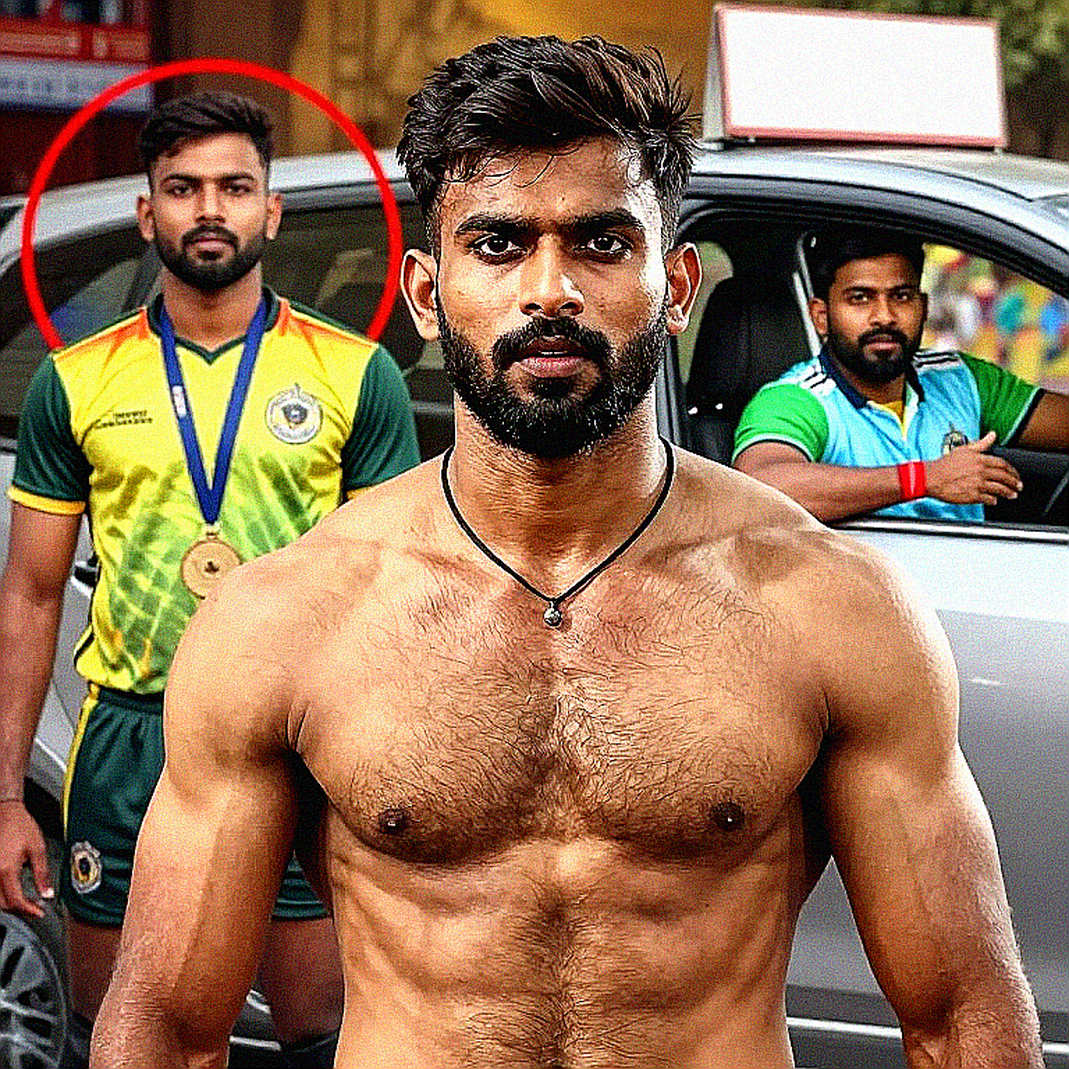
On paper, Surjeet Singh is a coherent choice. A corner defender sees the whole mat, counts the do-or-die clock, and manages defensive rotations; in kabaddi, defender-captains are common precisely because the defence is the unit that must be coordinated in real time. Naveen Kumar as vice-captain is equally coherent — a raider vice-captain is the man who will physically stand on the mat for the compulsory third raid. It is the discipline-plus-firepower split. And that is my entire point: this split is kabaddi's oldest template, not a 2026 innovation. Selling it as one is the weakest part of the story.
Core: six points, five of which the release is silent on
1. Sanction is the fact that determines the shape of everything else.
Kabaddi is not a Commonwealth Games sport and never has been, including the reduced ten-sport Glasgow 2026 programme. So "Commonwealth" here describes a brand, not a status. There are only two routes: either this is an International Kabaddi Federation-affiliated championship open to member federations of Commonwealth nations, or it is a promoter-run event borrowing the name. The sanctioning body is the most important unstated fact in the entire story, and it decides how much everything else is worth.
The difference is not clerical. A federation-sanctioned championship carries ranking points, a player-release protocol with franchises, a standard anti-doping regime, a certified referee pool, and a "captain of India" that means something both on the mat and in the record book. A promoter-run event leaves the captaincy real on the mat and invisible in the archive. I am an archive man. I know the difference because every clip in my library has a stat note glued to it — and a clip whose tournament has a disputed name is a clip that cannot be used.
2. "Inaugural edition" versus "back-to-back titles": the archive reflex gets its first test.
I was wrong about the three-peat until the tape corrected me. For years I treated Patna Pirates' three straight titles in Seasons 3 to 5 as a kind of magic — "that man did something that cannot repeat". Then I rewatched the footage. There was no magic. There was a very mechanical thing: defensive discipline, repeated all outs, a raider holding one rhythm. Since then I have a rule — the sentence I like most is the first one to check.
The best-sounding sentence in this release is "back-to-back titles". Which makes it the first to check. One of two things is true. Either the line was pasted from a different tournament's template, because press releases are often made by opening an old file and changing the name. Or a previous edition of the Commonwealth Kabaddi Championship genuinely exists, in which case the "inaugural" claim is wrong. The damage differs. In the first case it is credibility — if one sentence came from an old template, how much of the rest was checked? In the second it is prestige — a prior edition raises the tournament a tier, and the whole story changes from "a new event is announced" to "an old event is being rebuilt", which is a different article.
Until that contradiction is resolved, I will not assign this tournament a prestige rating. The tape was telling a different story than the crowd, and here there is no tape — only a paragraph.
3. Defender-captain plus raider-vice-captain: the oldest template in kabaddi, not a new experiment.
The star-first trap looked like genius from the cheap seats. For years I watched Telugu Titans and believed their problem was a missing raider. Season 5's Hyderabad leg, 2026 — I was twenty-two, a BA International Communication student, and the arena rose every time Rahul Chaudhari raided. On the other side of that same mat stood Patna's defensive unit, working not like a hero but like a factory. I went home and cut a ninety-second video titled "Telugu Titans don't have a raider problem, they have a system problem", with three checkable numbers attached. Forty thousand views and a lot of angry comments.
The lesson holds. A roster problem is never one name, and neither is a captaincy problem. Making a defender captain and a raider vice-captain is not fresh thinking — it is kabaddi's default, because the corner defender is the one man who can see the whole mat, hold the do-or-die count, and own the defensive rotation. The raider vice-captain is logical because he is the one who actually stands on the mat for the compulsory raid. The captain picks from the edge; the vice-captain executes inside.
The real question is whether this was a choice or a compromise. In a thin squad where even the coach's role is unclear, the captain is the coach. In that situation the armband stops being decoration and becomes load-bearing, and the raider vice-captain occupies the most exposed position on the mat, because his failure shows on the scoreboard first.
4. Naveen Kumar and the bonus line: the dubki did not die; the bonus line killed it.
In 2026, with empty stadiums and Season 8 disrupted, I made a short series called "The Dubki Is Dead" from a locked-down room in Hyderabad. I used footage of Pardeep Narwal's dubkis and Season 7 data to argue that ducking escapes were being priced out while bonus points rose. Purists flooded the comments; coaches sent corrections by DM. Years later I think my conclusion was right and my reasoning was incomplete. The dubki is not a style, it is a risk calculation: ducking under a defender paid when defences stood tall and waited for the tackle. The bonus line pushed raiders deep, where defenders are already crouched — and against a crouched defender, the dubki is suicide.
Every bonus-line thesis starts as a hunch in a locked-down room and collides with data outside it. Here is the collision: a raider like Naveen Kumar is worth more than his touch points. He is worth the work the scoreboard never shows — spreading a full-strength defence. The bonus line pays only when six or more defenders are on the mat, so a deep raider forces the defence wide, and a wide defence opens tackle angles on the next raid. That is the mechanism the release turns into a feeling called "individual raids shifting momentum".
And the vice-captaincy is the political half of that mechanism. On a do-or-die third raid the captain picks the name from the edge, but the vice-captain is the one who has to execute it. If it fails, the raider goes out — not the captain. So Naveen Kumar's appointment is not a ceremony. It is an explicit transfer of risk: decision to Surjeet, consequence to Naveen. That is fine. Just stop calling it new thinking.
5. Who is standing opposite? Nobody is named — and that is the biggest risk.
Jakarta taught me that bronze can hide a co-favourite. In 2026 I was a junior digital producer covering the Asian Games kabaddi from Hyderabad. India lost a group game 23-24 to South Korea, then the semifinal 18-27 to Iran, and came home with bronze — the first missed men's gold after seven straight. My editor wanted betrayal copy. I wrote a hot take instead: India's bronze was physics, not betrayal, and Iran's wrestling-derived defence plus Fazel Atrachali's tackle geometry was the story. I pulled clips of the ankle holds and chain tackles and named Iran co-favourite in every preview afterwards. Coaches shared the piece. I stopped writing guaranteed-gold previews.
Apply that lens here. Who does India play in the Commonwealth Kabaddi Championship 2026? The release names no country. And a structural fact settles the tournament's prestige: Iran is not a Commonwealth member. The team that beat India in a Jakarta semifinal cannot, by definition, be in this field. Pakistan, Bangladesh, Sri Lanka, England, Canada, Australia, Kenya, South Africa — that is the plausible list. Good teams, but the co-favourite of Asian kabaddi is structurally absent. "A new addition to the calendar" can be true while "global expansion" has to accept a boundary.
The second risk is the rulebook. Pakistani and Punjabi-diaspora sides come from a circle-style tradition — circular field, one-on-one offence and defence, different scoring, a completely different athlete profile. If the organisers are running Standard Style while some member federations arrive from circle style, the rules were negotiated somewhere already, and that negotiation is not in this release. When the rulebook is unnamed, assume somebody was told not to discuss it.
6. No mention of a women's draw: the attention economy is upside down, and this announcement does not right it.
Women's kabaddi owns four Asian Games golds and no franchise league. The men's league is the country's second-most-watched property behind the IPL, while domestic non-league kabaddi outside Haryana and Punjab sits uncovered. That is an economics story, not a sentiment story — the same logic that governs the circle-style versus standard-style turf war between two bureaucracies.
Now look at the announcement. It is described as a new addition to the international calendar. Does that addition include a women's draw? The release says neither yes nor no. That silence is not neutral. When a new international event omits the women's category, experience says the category is absent — and if it exists, it goes in the first sentence. In a sport where women own the medals and men own the market, the word "expansion" needs a subject.
And one more thing that has to be said: the national-game myth.
Kabaddi is not India's national sport. A 2026 RTI reply confirmed that no such notified designation exists. A writer who claims a fact-checking reflex cannot recycle the folklore — and the folklore returns with every big kabaddi announcement, covering the real work, which is structure, sanction and money.
Contrarian: where I could be wrong
Three places, stated plainly so the record is clean if I have to correct myself later.
First, a previous edition may genuinely exist and my inaugural flag may be pointing the wrong way. Various "Commonwealth" kabaddi events have been run in different decades under different federations, with no shared record. If the organisers prove a first edition happened, my argument does not collapse — the tournament's prestige rises and the "new addition" line is proven wrong. The contradiction survives either way; only the culprit changes.
Second, the sanction may be perfectly fine and simply omitted because this release was written by a PR agency rather than a federation. That is the most likely explanation, and it does not reduce the criticism — an agency's error is the organiser's error, because credibility is borrowed in the organiser's name. A squad list can arrive later. A sanctioning body's name does not arrive later; it arrives first.
Third, and most honestly: in a thin squad with an unclear coaching structure, captaincy may genuinely be the whole story. With no clear head coach, the do-or-die rotation, timeout arithmetic and defensive calling all sit on the captain. In that case Surjeet Singh's appointment is not decoration but the tournament's biggest technical decision. I like that possibility, because it does not kill my criticism — it gives it a direction.
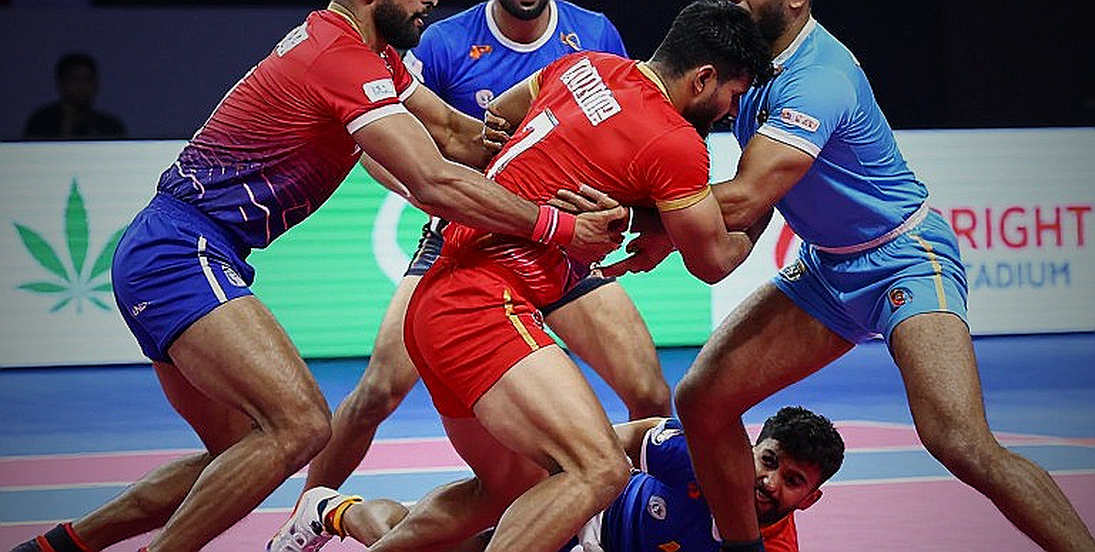
And a warning to myself, which I keep forgetting: analytics overreach. Super 10s, High 5s and raid-success rates are real, and they do not see everything. They do not see how tackle angles change on a mud court, what one-on-one thinking does in circle style, or how a raider's decision changes when the cant breaks in the thirtieth second. The day I believe a spreadsheet has seen the mat is the day this beat ends for me.
Takeaway: what can be tested in the next three weeks
One falsifiable prediction. If the sanctioning body is still unnamed by the time the squad list drops, treat this as an exhibition with a real trophy — genuine on the mat, invisible in the record book. If the name does arrive, ask which tier of that federation's ranking this championship occupies. The answer tells you how much weight the title "India captain" carries this year.
Second, watch one thing on the mat: India's first do-or-die raid. The man who takes that third raid, and the man on the edge who picked him, will tell you whether Surjeet Singh's captaincy is real or paper. Everything else is later.
And if this "new addition" has no women's draw, that gets written down too — because in a sport where women hold four Asian Games golds and men hold the market, every announcement is a choice. Keep naming the choices.